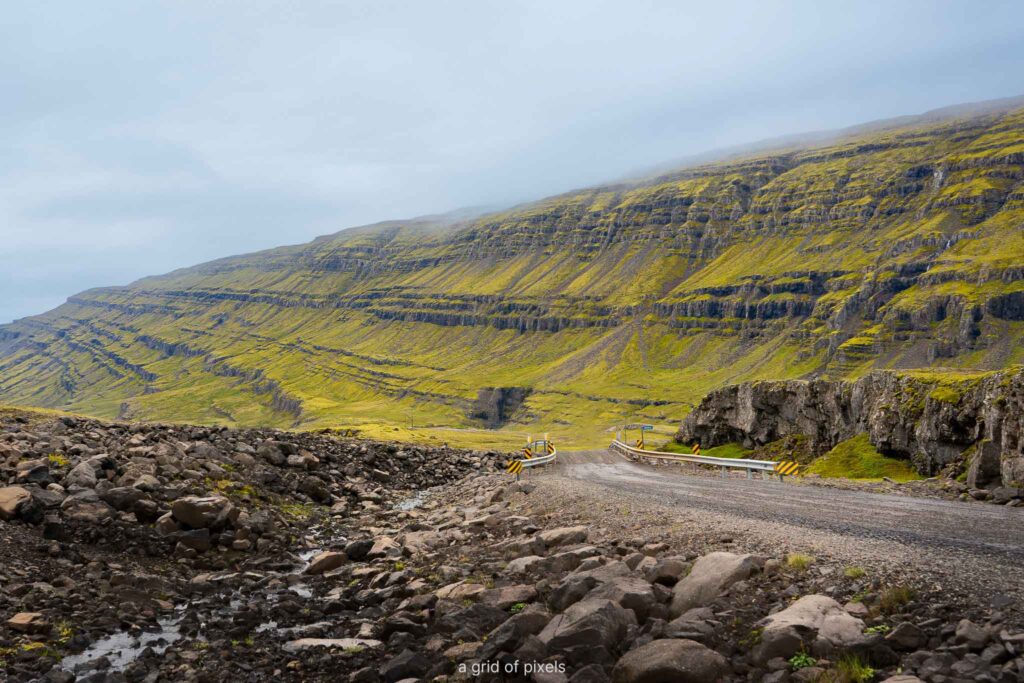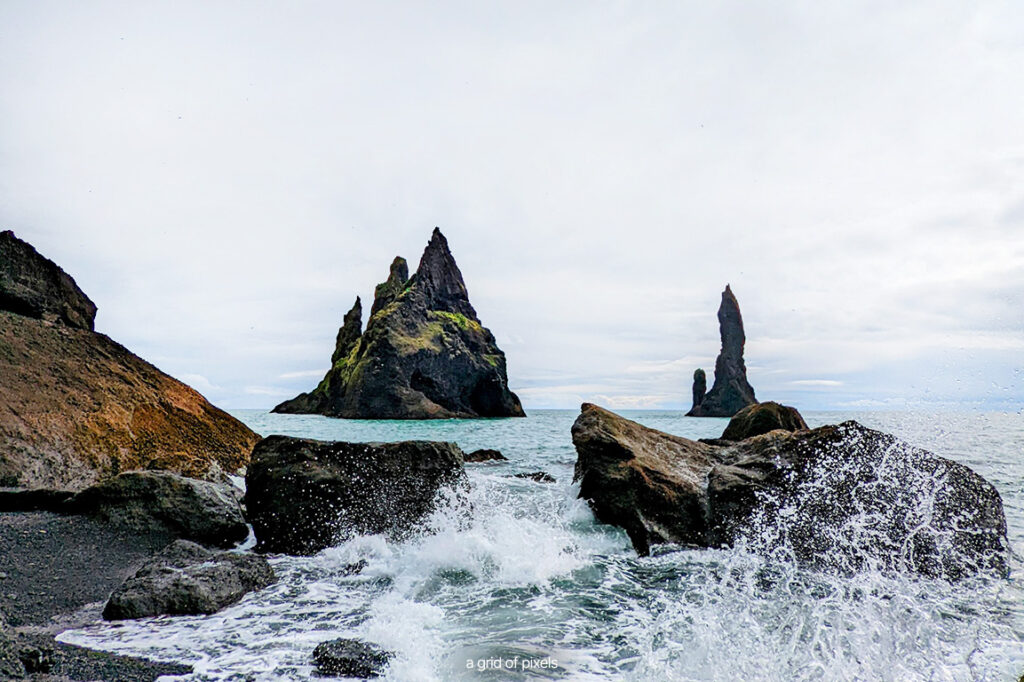
In just over a week, we chased waterfalls, bathed in ancient pools, wandered black sand beaches, and stumbled into Reykjavík’s biggest cultural celebration. This was Iceland, pixel by pixel. A land where fire meets ice, and time feels stretched across lava plains and glacial tongues.
Why Iceland?
Before you go, ask yourself: What’s drawing you here? Is it…
- Chasing the Northern Lights? (Best in winter)
- Exploring wild landscapes and waterfalls? (Ideal in summer)
- Experiencing volcanic terrain and geothermal activity?
- Or simply immersing in Icelandic food, culture, and folklore?
For me, it was all about the landscapes. Endless horizons, mossy lava fields, towering falls. I went in late August which was enough sunlight to see it all, with a slim chance of catching the aurora.
Journey Overview
- Duration: 8 days
- Season: Late August (end of summer)
- Daylight: ~16 hours per day
- Style: Road trip + homey stays
- Best For: Scenery lovers, waterfall chasers, slow travelers
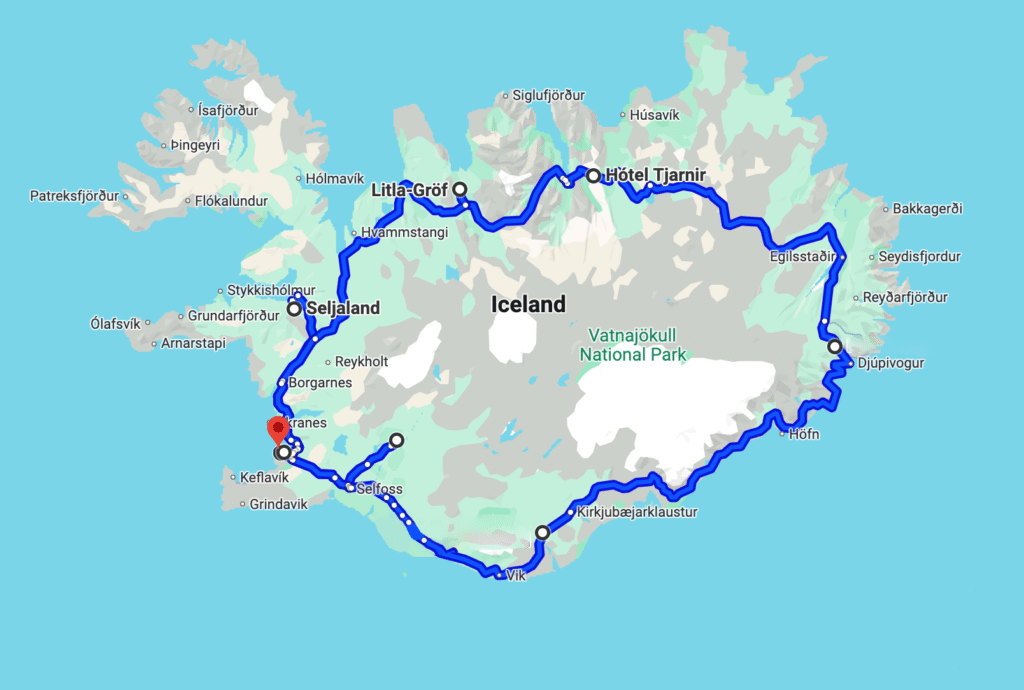
- Route: Full Ring Road loop (Route 1 — Iceland’s main highway)
Getting There + Around
We flew in from London into Keflavík International Airport.
Driving is essential in Iceland as this isn’t a hop-on, hop-off destination. Renting a car gave us complete freedom to linger where we wanted and soak in the landscapes without a ticking clock. Often, one of us would take the wheel while the other simply stared out the window, admiring in awe.
If you’re short on time, focus your attention on the southern stretch of the Ring Road (from Reykjavík to Diamond Beach) where the scenery is most dramatic and diverse.
Tip: If you’re traveling off-season or plan to venture onto side roads, rent a 4×4. Iceland’s weather can change in an instant, and wind damage to car doors is so common that most insurance providers won’t cover it. Open and close your doors with care as you never known when a gush of strong wind will hit.
When to Go
I visited in August, technically still summer in Iceland, but don’t expect warmth. The air was crisp, often cold enough to justify wearing at least three layers. Still, the trade-off was well worth it. With around 16 hours of daylight each day, we had ample time to chase waterfalls at golden hour and take in the landscapes without racing against the sun.
The midnight sun begins to fade toward the end of summer, but there’s still a lot of daylight. Below is a visual showing how daylight hours shift throughout the year.
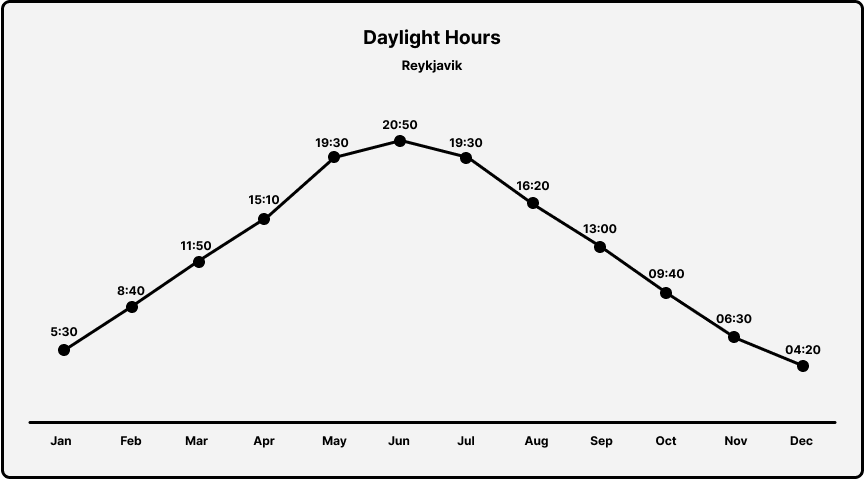
Fun fact: Iceland is just below the Arctic Circle, so in summer (June/July), the sun barely sets. On the flip side, in winter (December/January), there’s only 4 hours of daylight. I found August the perfect sweet spot with 16 days of daylight hours.
Day 1: Straight Into the Elements
Route: Keflavík Airport → Blue Lagoon
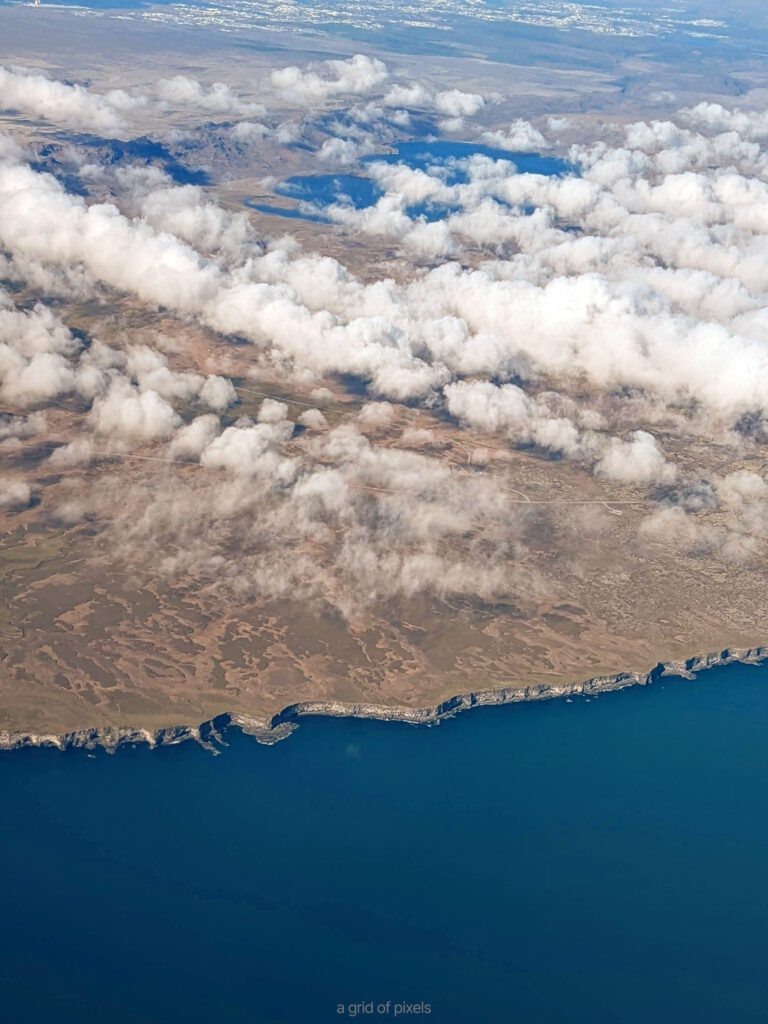
The moment we landed, grabbed our rental car, and hit the road, it was clear: Iceland is something else. Within minutes, we were driving through vast, black lava fields under moody skies. Steam curled in the distance. It didn’t feel real and it was more like stepping into another planet. Goosebumps.
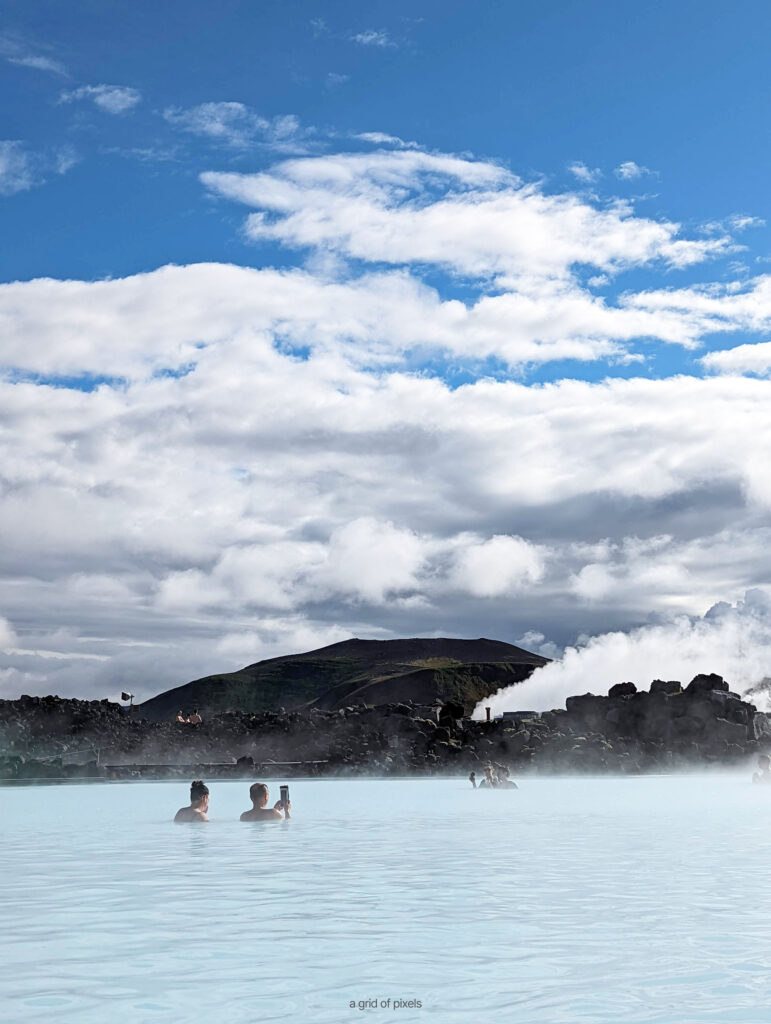
Our first stop was the iconic Blue Lagoon, and it delivered. The milky, mineral-rich water set against a backdrop of jagged volcanic rock was surreal. Sure, it’s popular. But after a long flight, floating in that warm, otherworldly water felt like the perfect reset.
Tip: Book your Blue Lagoon time slot in advance. Sunrise or sunset is especially magical and far less crowded.
Curious about the difference between Iceland’s two most famous spas? Here’s a quick breakdown:
- Choose Blue Lagoon if you want the classic, bucket-list experience with striking blue water, luxe facilities, and a dramatic lava-rock setting.
- Choose Sky Lagoon if you prefer something newer, more intimate, with ocean views and a unique seven-step bathing ritual.
- Consider both if your itinerary allows, each offers a different kind of wonder, and both are worth the dip.
Day 2: Reykjavík in Celebration
Event: Culture Night (Menningarnótt) at Reykjavík City Center
Our second day in Iceland just so happened to fall on Reykjavík Culture Night (occurs around August 21), one of the country’s biggest annual festivals. It felt like perfect timing, as if the city was throwing us a welcome party.
From the moment we stepped into the city center, the atmosphere was electric. Streets were closed to traffic, and people of all ages wandered freely, stopping at pop-up art exhibits, live music and performances.
We spent hours exploring Laugavegur, the city’s main shopping street. Along the way, we admired vibrant street art splashed across building walls, browsed design boutiques, and ducked into bars pulsing with Iceland’s love for alternative rock music, a genre that clearly holds a special place in the city’s creative heart.
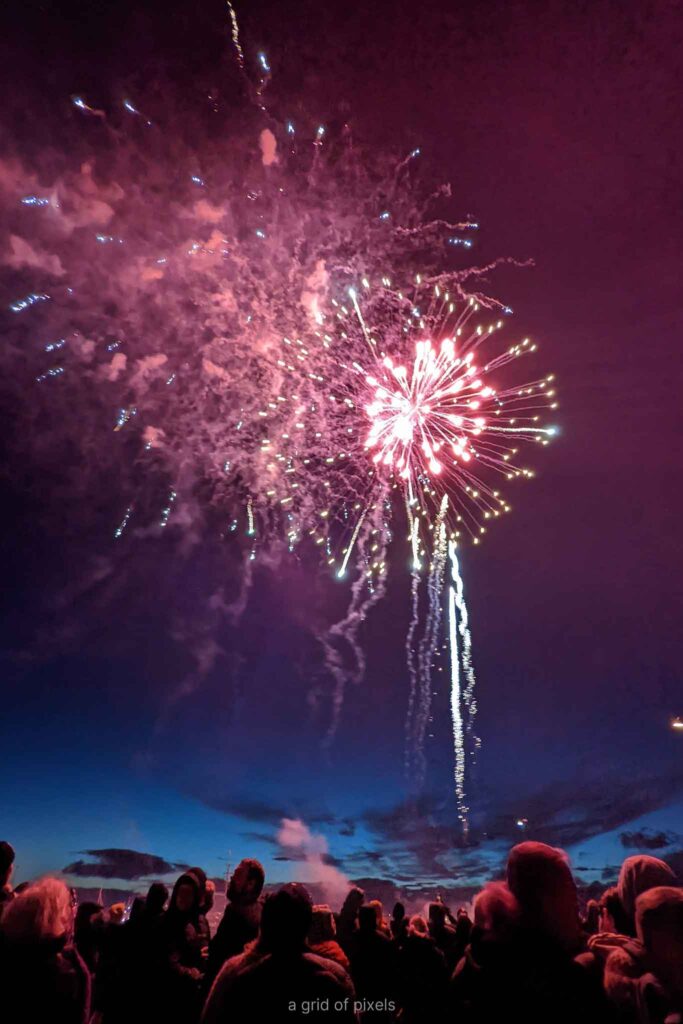
The night ended with a majestic fireworks show over the bay. It was the kind of moment that makes you pause, and feel lucky to be in exactly that place, at exactly that time.
Day 3: Golden Circle
Route: Þingvellir → Strokkur → Gullfoss → Kerið Crater
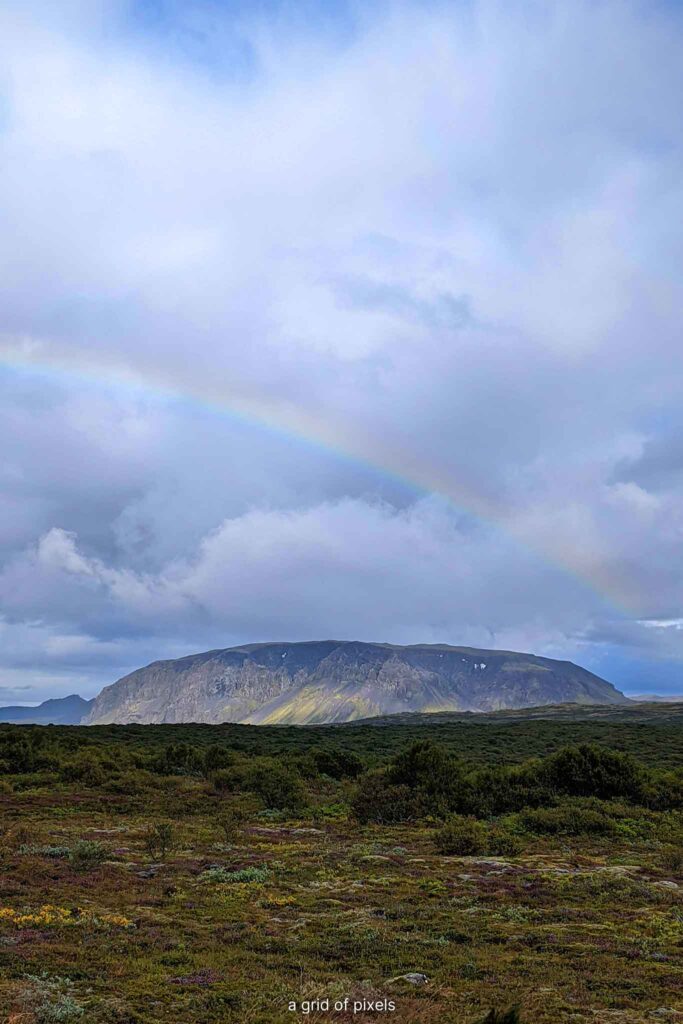
We began early, following one of Iceland’s most iconic day trips… the Golden Circle. It’s a loop showcasing Iceland’s geological highlights. Even with other tourists around, it didn’t feel overdone. Each stop offers something uniquely surreal.
Stops Along the Way:
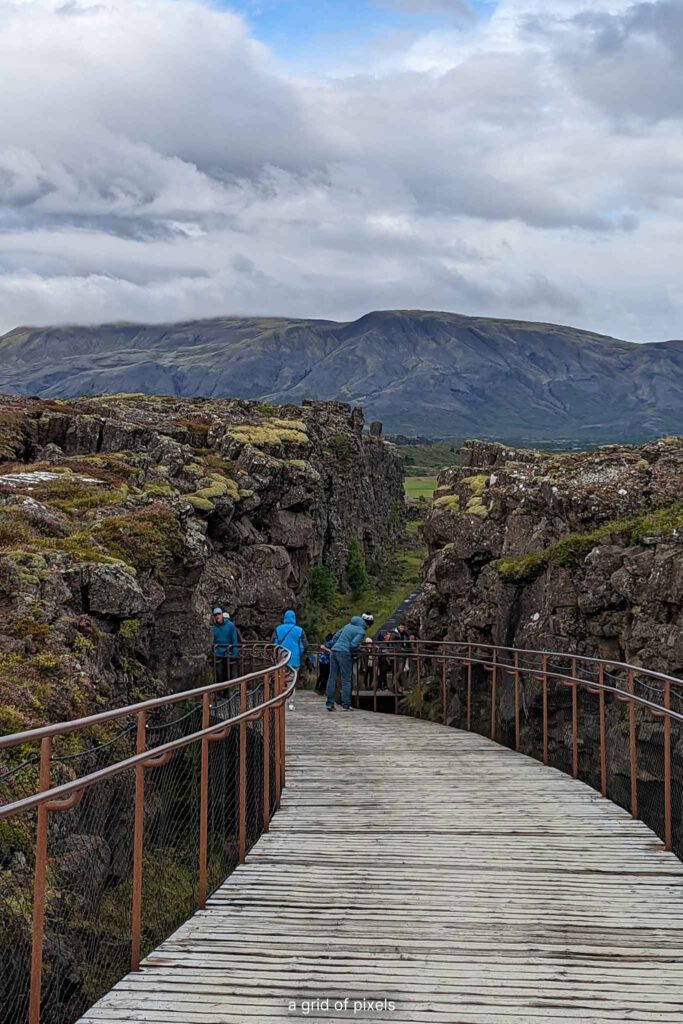
- Þingvellir National Park: A UNESCO World Heritage Site and the only place on Earth where you can walk between two tectonic plates. The path cuts between the North American and Eurasian plates, surrounded by moss-covered cliffs and silvery streams. You can even snorkel in Silfra fissure (though we skipped this).
- Strokkur Geyser: Every 5 to 10 minutes, this geyser erupts up to 30 meters, sending scalding water into the sky with a dramatic hiss. Expect to get wet if you stand downwind.
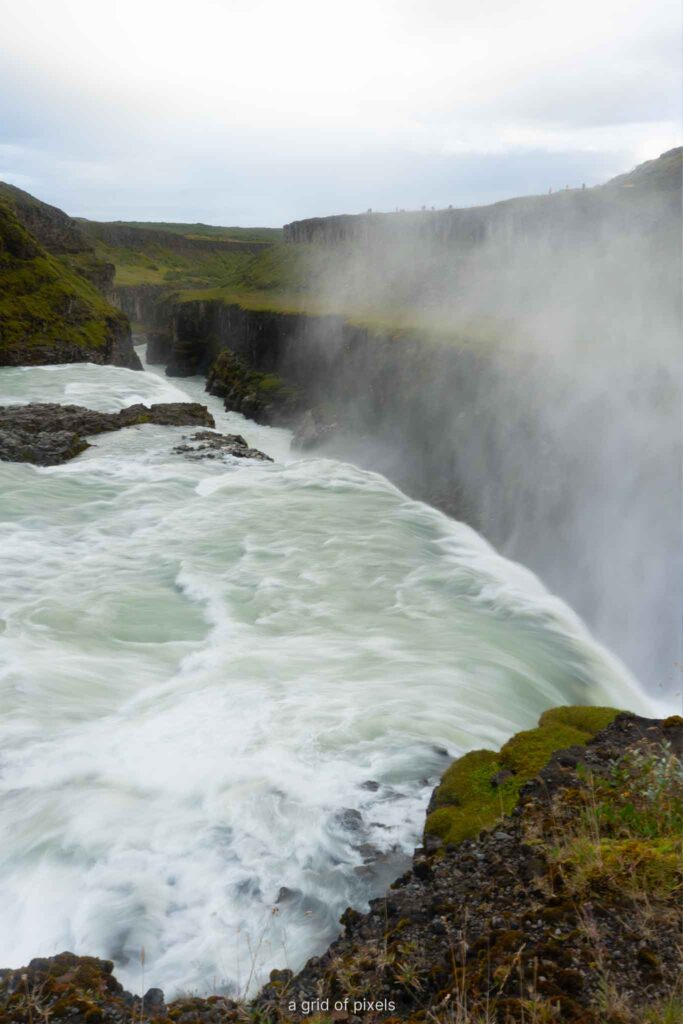
- Gullfoss Waterfall: A powerhouse of nature. Gullfoss thunders down in two stages into a canyon so deep you can’t see the bottom. Mist rises in waves, and when the sun hits just right, you might catch a rainbow in the spray. Follow the walking paths for incredible angles, including one where the falls feel like they’re tumbling straight toward you.
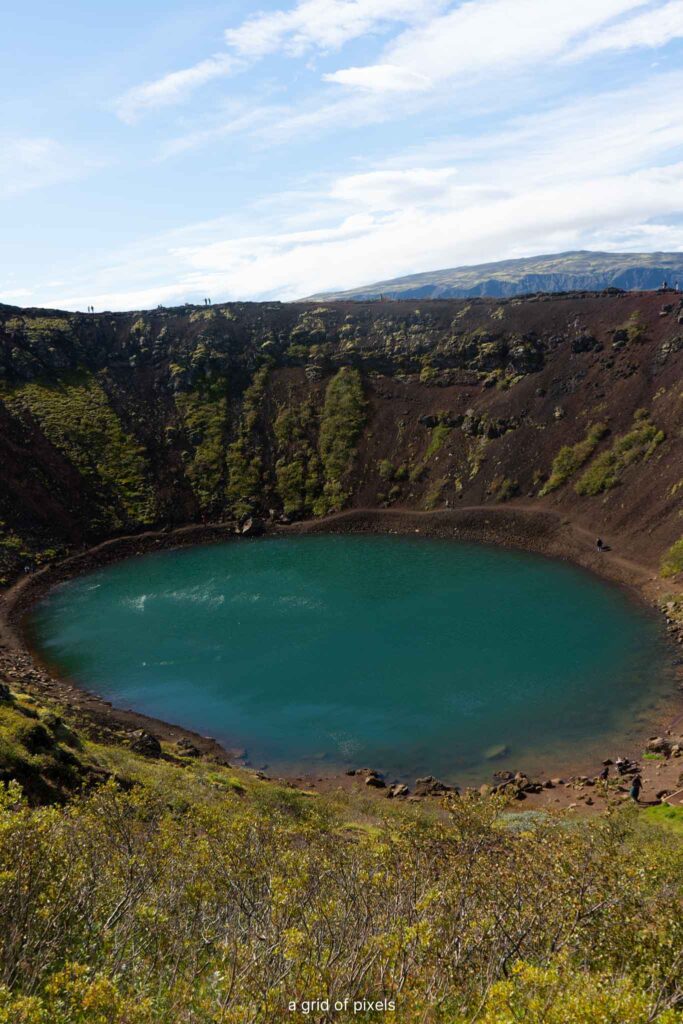
- Kerið Crater: A volcanic crater lake with fiery red soil and a vivid aqua pool in its center. The colors contrast beautifully, and the short trail around the rim offers panoramic views of the surrounding countryside.
Opt for a self-drive itinerary over a guided tour. Having your own car means flexibility. You can linger at your favourite spots, dodge the tour crowds, and stumble upon lesser-known gems along the way.
Day 4: Waterfalls & Hidden Pools
Route: Seljalandsfoss Waterfall → Seljavallalaug Swimming Pool
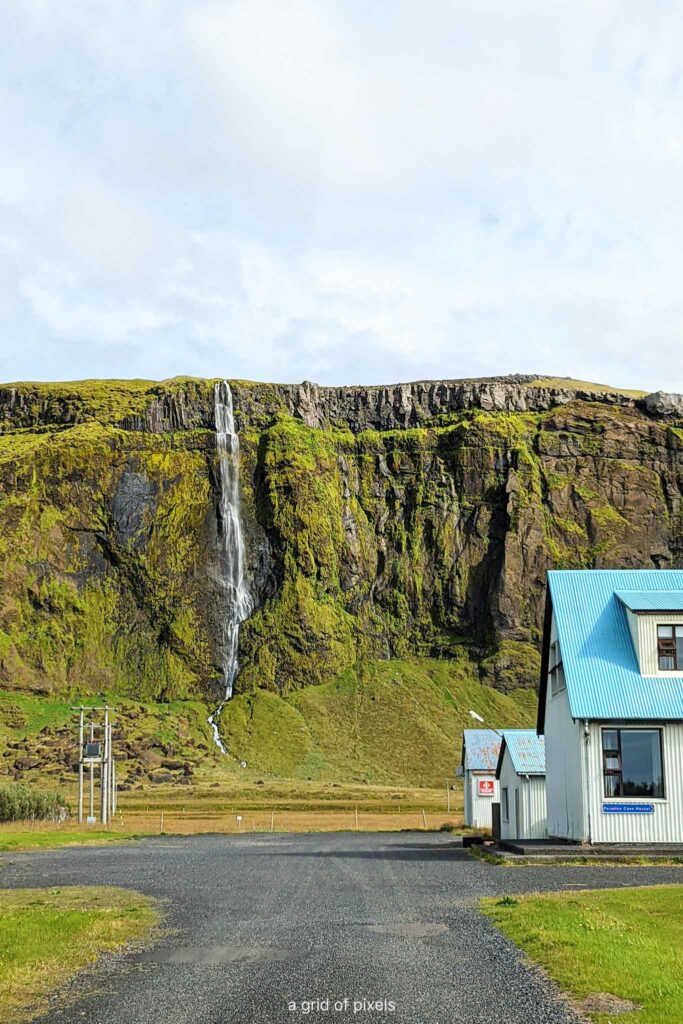
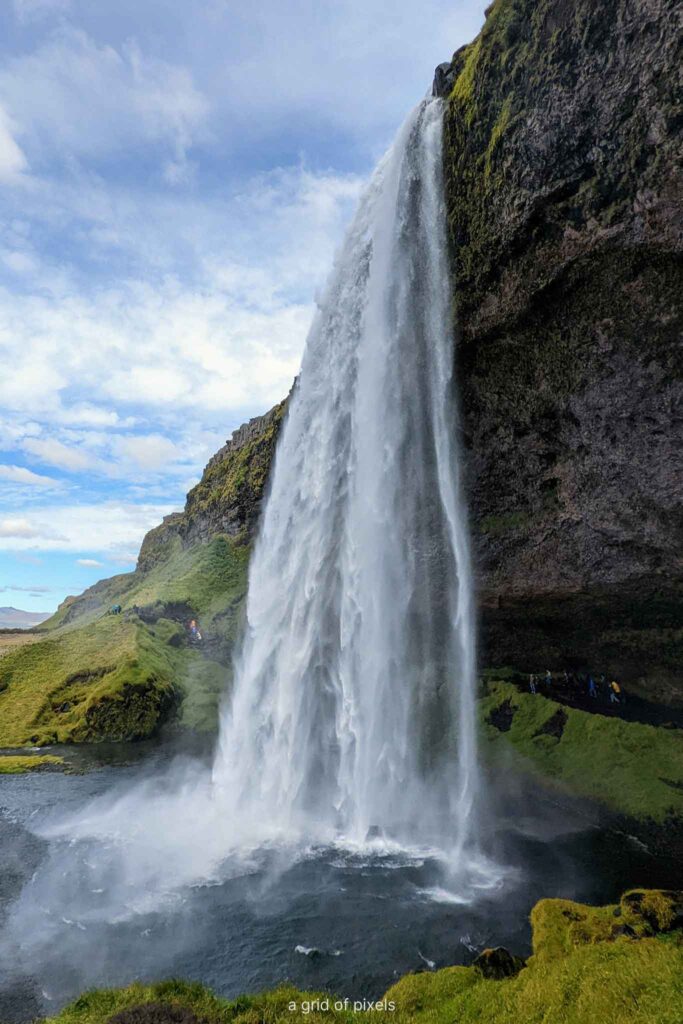
- Seljalandsfoss Waterfall: Yes, the waterfall you’ve seen splashed across postcards. But no photo prepares you for what it feels like to actually step behind it. The roar, the spray, the light refracting through falling water… It’s cinematic. You will get drenched, but it’s absolutely worth it.
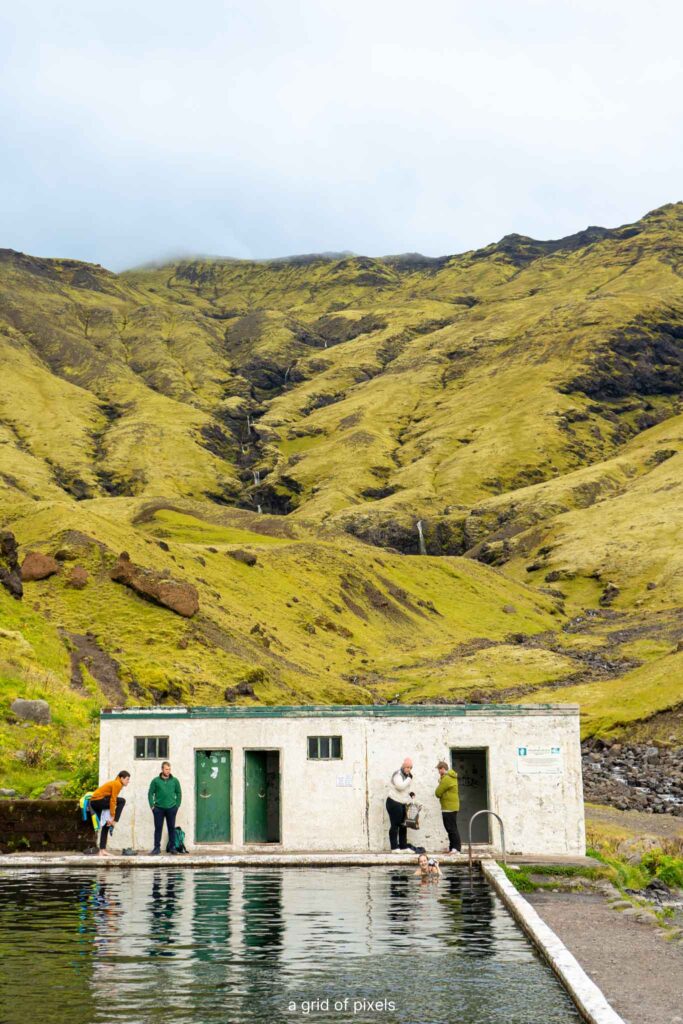
Tip: Wear a waterproof jacket and pack a dry bag. And don’t forget to turn around as you walk behind the cascade as the view framed by a curtain of water is unforgettable. - Seljavallalaug Pool: A little off Route 1, down a bumpy gravel road and short hike, lies Seljavallalaug, a remote outdoor pool nestled into a green valley. It’s Iceland’s oldest pool, built in 1923, and has a quiet charm that feels like a secret. Tucked into a quiet green valley, getting there requires a short hike along a gravel path flanked by streams and cliffs. When the white concrete pool finally appears, it feels like discovering a secret. The water isn’t as hot as the Blue Lagoon, but the setting is unreal. Mossy cliffs surround you, birds fly overhead, and the silence is complete. There are no changing rooms (just a concrete hut), and algae coats the pool’s bottom, but that’s part of the rustic magic.
Day 5: South Coast & Black Sands
Route: Skógafoss Waterfall → Reynisfjara Beach → Vik
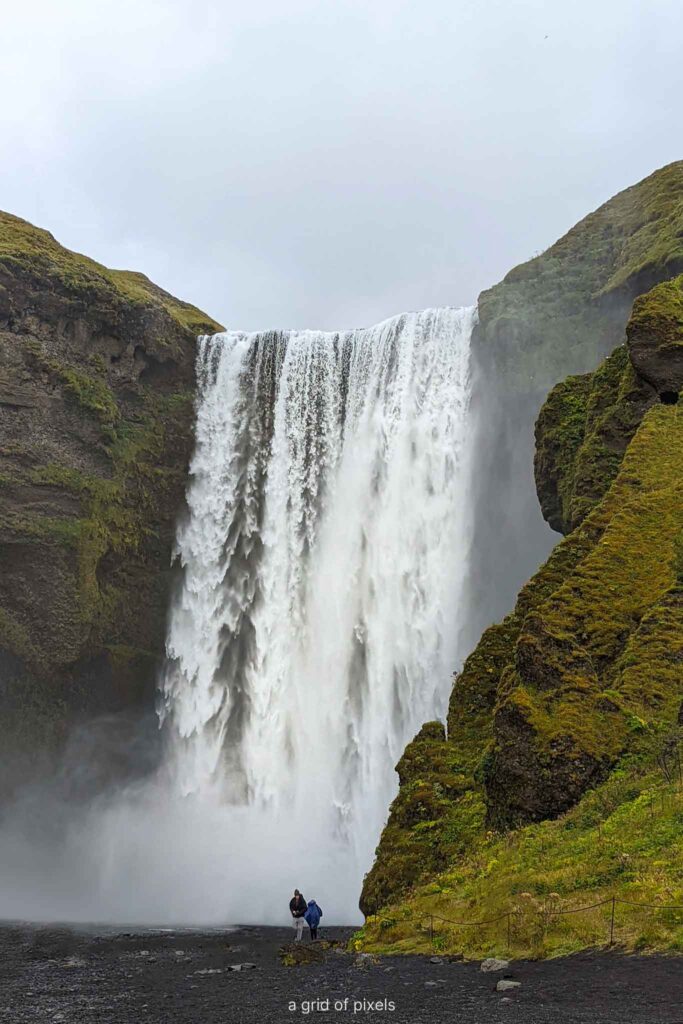
- Skógafoss: One of Iceland’s most iconic waterfalls, Skógafoss plunges 60 meters in a single, thunderous sheet of water. A constant mist creates rainbows on sunny days, and standing at its base feels like being in a Norse myth. We climbed the steep staircase to the viewing platform above. 500+ steps later, we were rewarded with sweeping views of green pastures, sheep-dotted hills, and endless sky. The river above continues through scenic valleys, great for longer hikes if you have time.
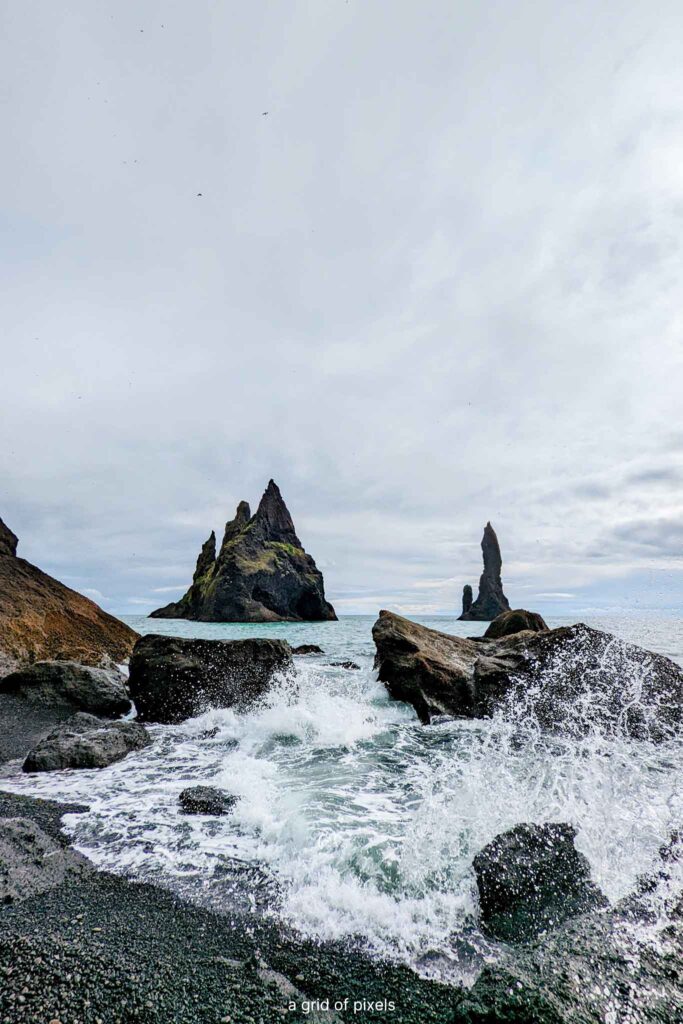
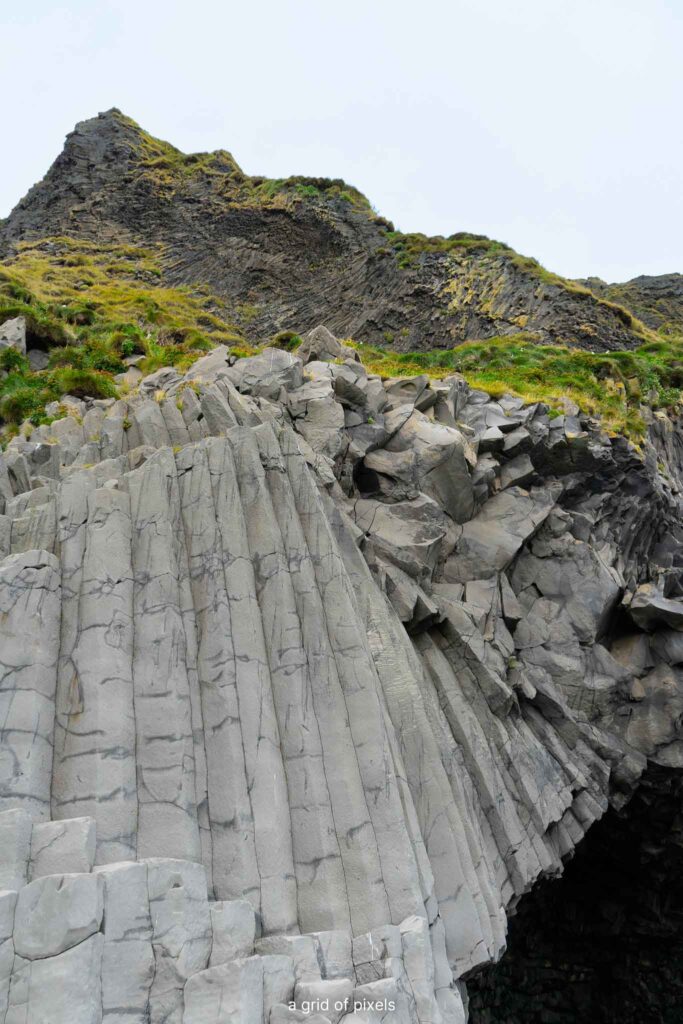
- Reynisfjara Beach: This black-sand beach is one of Iceland’s most photographed spots and for good reason. Towering basalt columns line the cliff like ancient cathedral pipes, while the Atlantic Ocean pounds the shore with intense, crashing waves. It’s raw and cinematic, but also dangerous.
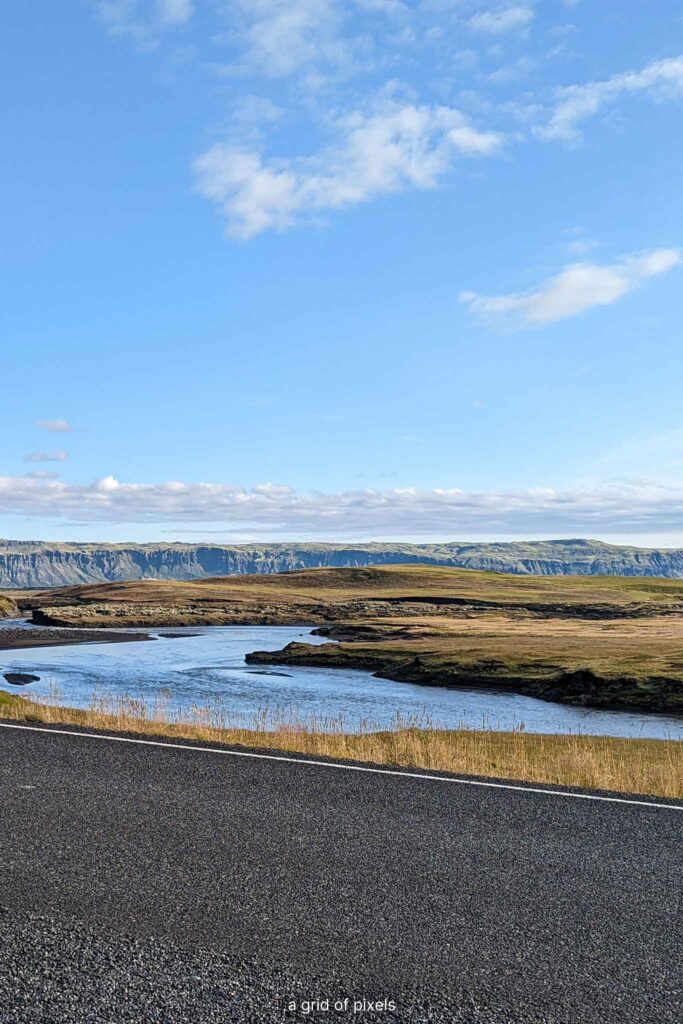
Warning: Sneaker waves have pulled tourists into the sea so always keep your distance from the waterline, no matter how calm it looks. - Vik: We ended the day in the charming village of Vik, the southernmost settlement in Iceland. Nestled between sea cliffs and lava fields, Vik is quiet, scenic, and makes a great overnight stop.
Day 6: Ice, Diamonds & Glaciers
Route: Vatnajökull National Park → Jökulsárlón → Diamond Beach
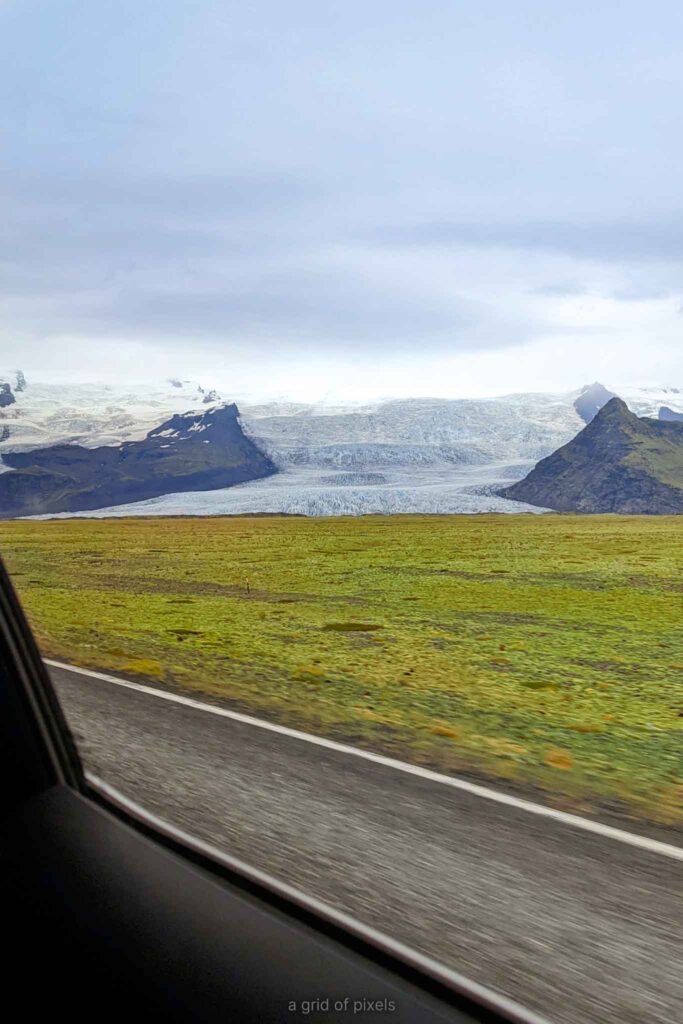
- Vatnajökull: Europe’s largest glacier, which covers about 8% of Iceland’s landmass. Its sheer scale is staggering. Beneath its surface lie active volcanoes, frozen plateaus, and hidden ice caves. This glacier isn’t just massive; it’s legendary. Vatnajökull has shaped the Icelandic landscape for millennia and continues to do so today. The surrounding Vatnajökull National Park was established in 2008 and is now a UNESCO World Heritage Site, celebrated for its geological and ecological significance.
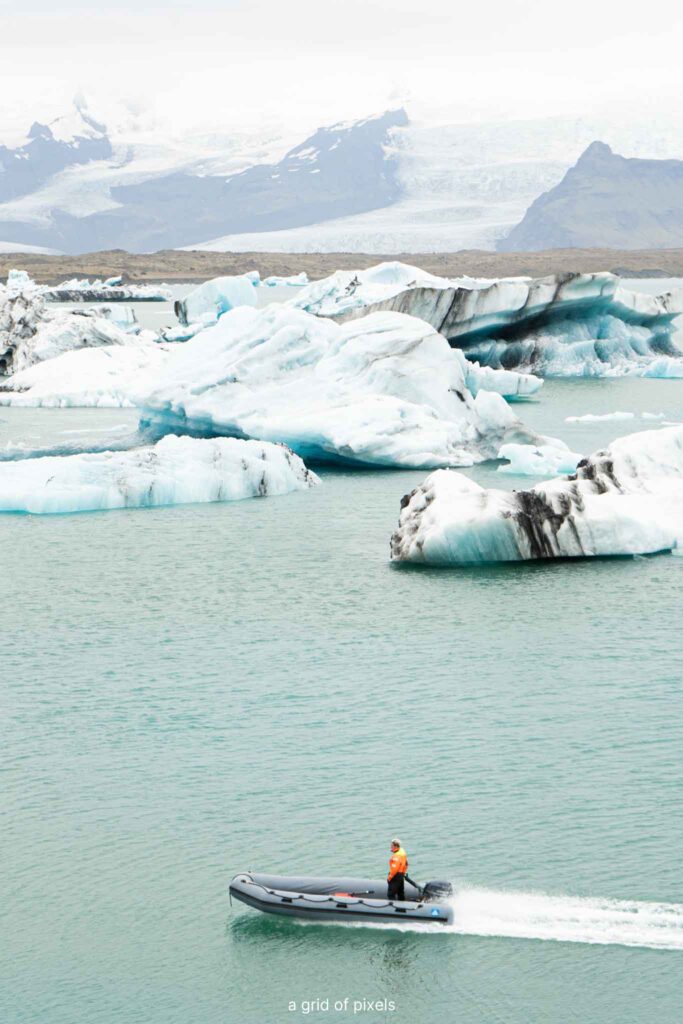
- Jökulsárlón Glacier Lagoon: This is where chunks of glacier calve off into a surreal, iceberg-filled lake. The icebergs, some pure white, others streaked with volcanic ash, float silently across the still, turquoise water.
- Diamond Beach: Just across the road, this beach offers one of Iceland’s most photogenic sights. Here, icebergs that break free from the lagoon are washed ashore by the Atlantic’s crashing waves. They rest like scattered diamonds across the jet-black volcanic sand.
We spent a while here, just listening to the rhythm of waves, ice cracking in the distance, and seals swimming. Make sure to visit early or late in the day to avoid crowds, and bring a camera as this is one of the most cinematic places you’ll ever see.
Day 7: Into the Wild Northeast
As we drove north, the scenery shifted dramatically. Gone were the coastal cliffs and green hills, replaced by endless lava fields, rust-colored mountains, and stretches of barren land that seemed untouched for centuries. You begin to understand why NASA used this part of Iceland to train Apollo astronauts.
- Dettifoss Waterfall: Thundering down 44 meters (144 feet) into the Jökulsárgljúfur canyon, the waterfall delivers over 500 cubic meters of water per second. The ground beneath your feet vibrates from its sheer force. The spray blasts out so far you’ll feel it even from the viewpoint. It’s raw, primal energy in motion. The trail here is rocky, windswept, and adds to the adventure.
Tip: Choose the west side of Dettifoss (via Road 862) for a paved, safer route with excellent viewpoints. The east side (Road 864) is rougher and often inaccessible in bad weather.
Day 8: The Loop Completes
Our final full day on the road began under the bluest sky we’d seen all trip. Not a cloud in sight, as if Iceland was offering one last cinematic send-off.
As we traced the western curve of the Ring Road back toward Reykjavík, the scenery softened into wide valleys, quiet fjords, and sleepy towns, each with their own rhythm and stories.
After 1,300 kilometers, we were back where we started. Reykjavík eventually reappeared on the horizon, and in that moment, I knew: this wasn’t a goodbye.